The Job I Gave a Machine
I gave Claude Sonnet 5 a two-part job last week. Plan it. Run it. Finish it. I didn't check in halfway through. I didn't specify which terminal command to run first or which file to touch. It planned the steps, ran them, checked its own work, and moved to the next part. No hand-holding.
Then I thought about my own direct reports. How many of them get this kind of trust from me?
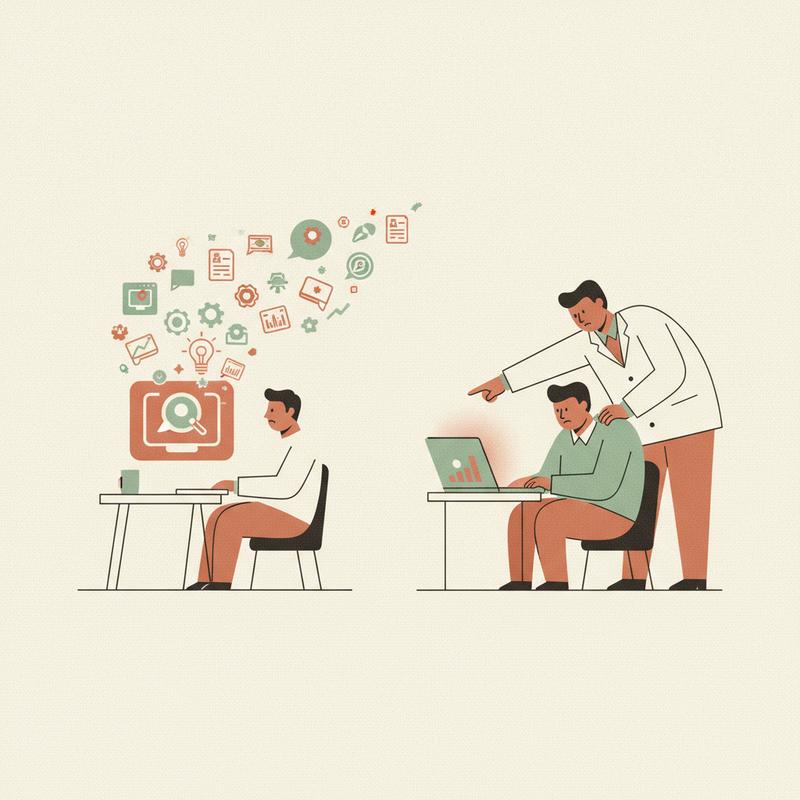
The Most Agentic Model Yet
Anthropic built Sonnet 5 to plan, use tools like browsers and terminals, and run without supervision, according to Anthropic's own announcement. Testers noticed something specific: it checks its own output without being asked. It finishes complex jobs where earlier Sonnet models stopped halfway.
Swap the word "model" for "employee" in those two sentences. Checks its own output without being asked. Finishes the job without stopping halfway. This describes a strong senior engineer, not a chatbot. We built a system to act like our top performers, and it works. Anthropic priced it near Opus-level performance at a fraction of the cost too, which tells you something: autonomy isn't the premium feature anymore. It's the baseline.
We Already Had the Data. We Sat On It.
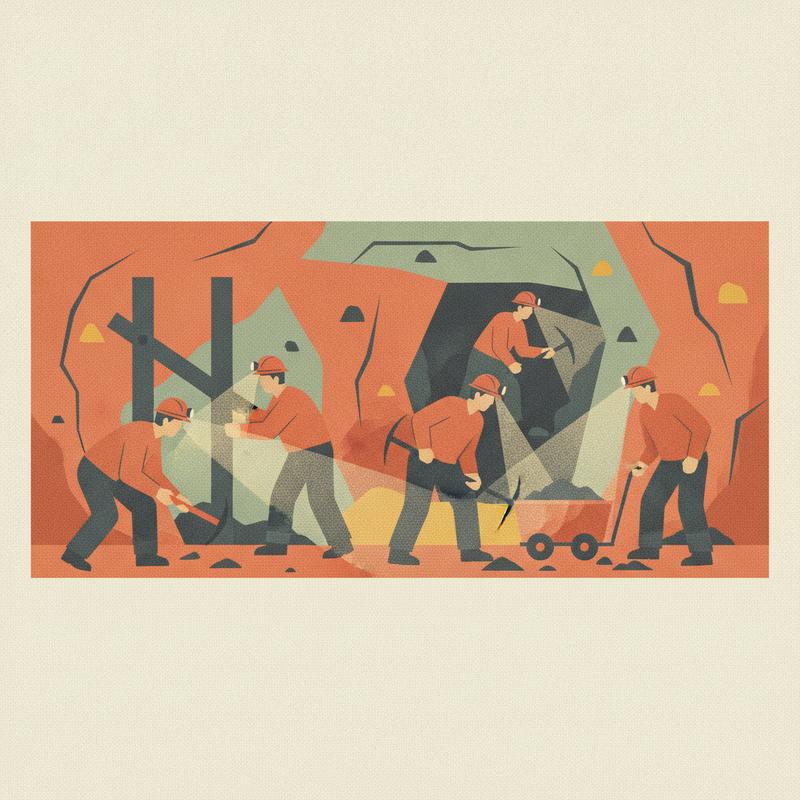
None of this is new to anyone who studies teams. Research on team composition autonomy traces back to a 1951 study of coal miners. No manager went down into the mines with them, so the miners picked their own crews, trained each other, and looked after the families of workers who died on the job. Autonomy wasn't a perk down there. It was survival.
Since then, the evidence has piled up. High-autonomy teams post higher productivity, more job satisfaction, and stronger commitment. And still, recent survey data shows 45 percent of teams report zero say in who joins their own team. Zero input on the single decision most tied to whether they succeed.
We had this data before Sonnet 5 shipped. We sat on it. Then a lab in San Francisco built a model able to plan its own steps and finish without a babysitter, and now everyone wants to talk about "agentic AI" like it's a fresh idea.
It isn't fresh. It's overdue.
Delegation Isn't All-or-Nothing
Here's where leaders freeze. They hear "give people autonomy" and picture handing over the building keys. Not how it works. Not how Sonnet 5 works either. Anthropic shipped it with guardrails, real-time safety checks, and boundaries on what it will build.
Tannenbaum and Schmidt mapped this out in 1973: delegation sits on a continuum, not a switch. Hand over one decision fully, say, which tool to pick, and keep another close, like budget. The skill is naming out loud which is which.
I run a version of this exercise with my own teams. Name ten decisions: hiring, firing, salary, vacation approval, skill training. Go around the room with cards, pick a delegation level for each one, and reveal them all at once. The gap between the highest and lowest vote is where the real conversation starts.
Try it this week. Pick five decisions your team makes. Ask them, out loud, how much say they believe they have. You'll be surprised how often the honest answer is "none," even on decisions you assumed you'd already handed over long ago.
Judge the Output, Not the Hovering
I wrote myself a note two years ago I still stand by: judge people by output, not visible busyness. The engineer glued to their desk every hour isn't automatically the one shipping the most value. The one who takes a walk mid-afternoon might be solving the hard problem in their head.
Sonnet 5 doesn't perform busyness for my benefit. It doesn't narrate every step to make me feel involved. It plans, runs, checks itself, and hands me a finished result. A model earns trust this way. A person earns it the same way, if their manager steps back long enough to let them.
Managers who won't let go aren't protecting quality. They're protecting their own need to feel needed. Harder to admit than "my team isn't ready."
The Retention Cost of Not Letting Go
Your best engineers already know what agentic autonomy feels like. They've built it, tested it, and shipped it into production for months now. They watch a model plan its own steps end to end, then walk into a status meeting where they're asked to justify a decision they made three days ago. The gap between those two experiences erodes trust fast.
I've watched skilled engineers leave companies over exactly this. Not for money. Not for title. They left because the trust extended to the tools stopped short of the people who built them. If your organization funds agentic AI while still routing routine engineering decisions through a manager's sign-off, don't be surprised when your strongest people find a company willing to close the gap.
Three Questions to Ask This Week
- Which decision on your team gets routed through you purely out of habit?
- Would you trust a model to make this decision unsupervised? If the answer is yes, why not the person who trained the model?
- What would you need to see before handing this decision over completely, and have you told your team what to expect?
The Wave Is Already Here
Gartner expects 40 percent of enterprise applications to carry task-specific AI agents by the end of 2026, up from under 5 percent in 2025, according to Gartner's forecast. Within a year, agents planning and finishing multi-step work without constant supervision won't be rare. It will be the default setting in the tools your team opens every morning.
If your company trusts a model to plan its own steps and finish the job, yet still routes a training course request through three approval layers, you don't have a technology problem. You have a trust problem, and it starts at the top.
At Step Up To BAT, the tool I built to measure how people experience their leaders, this shows up constantly in the write-in comments. Not "my manager doesn't trust the software." "My manager doesn't trust me." Same root, different label.
Give Someone the Wheel This Week
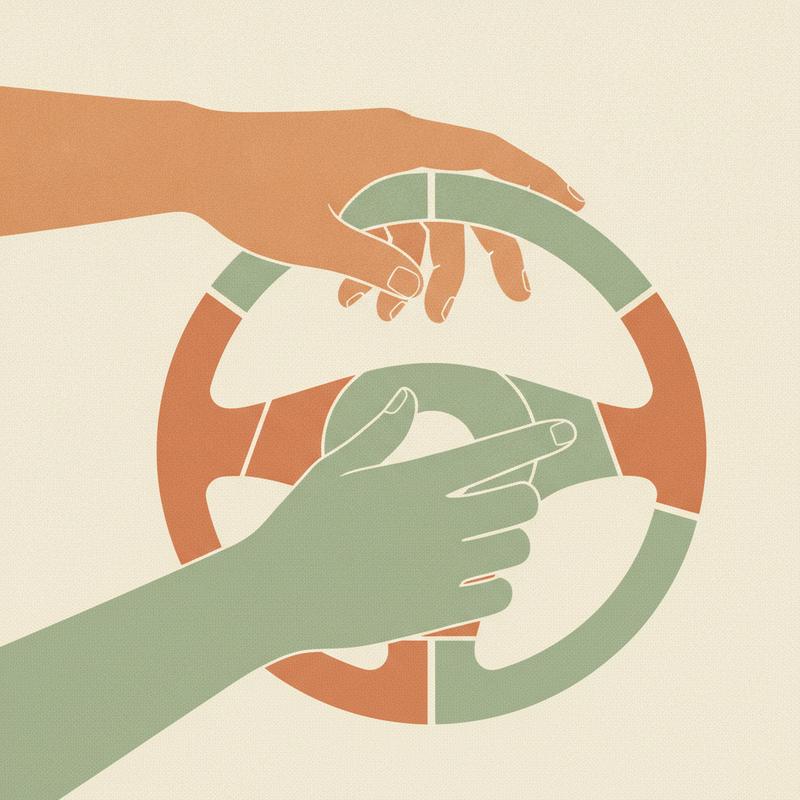
Pick one task you're still gripping. One decision still routed through you out of habit, not need. Hand it over fully this week. No check-ins. No "loop me in" clause. Set the goal, hand over the tools, and let them plan the route.
A model earned this kind of trust from us after months of training. The people on your team earned theirs over years, before you ever hired them.
What's the one decision you're still holding onto, the one your team already earned?